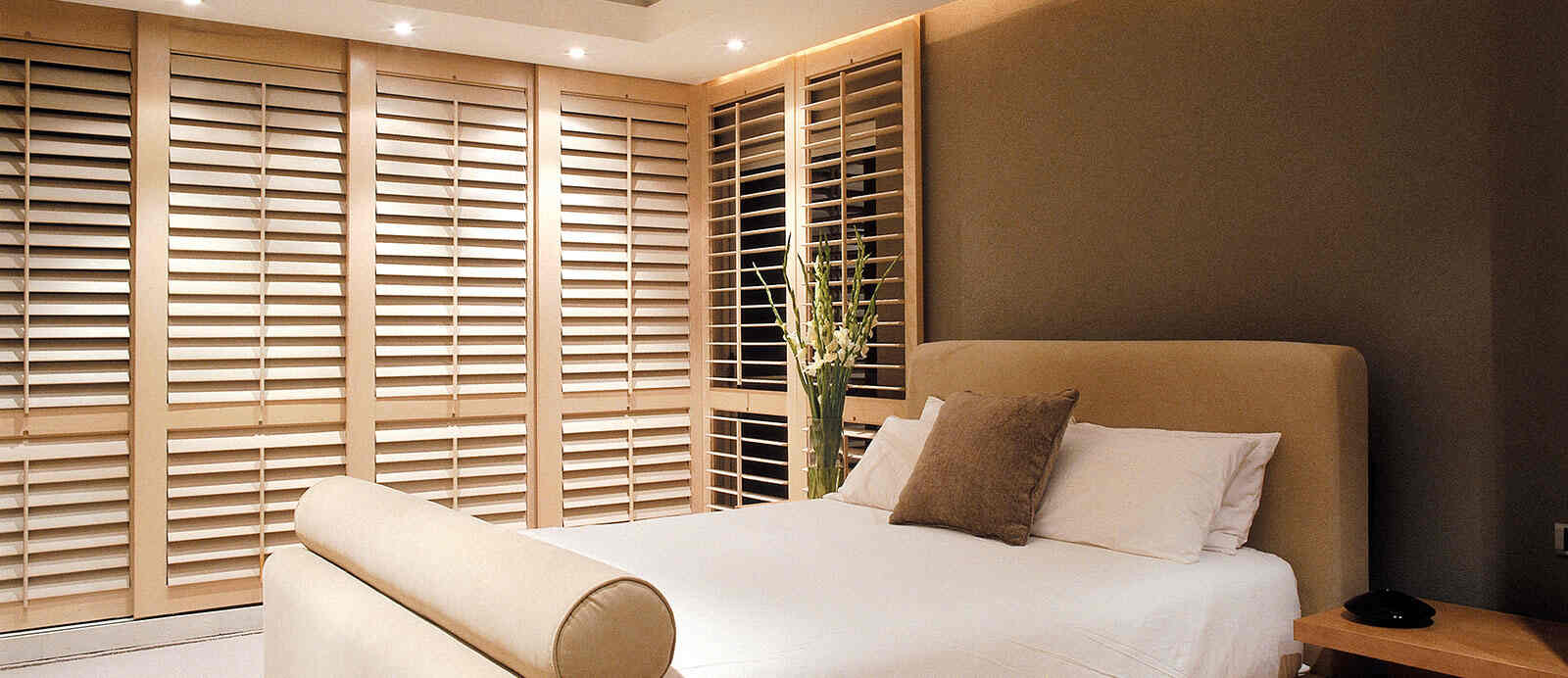
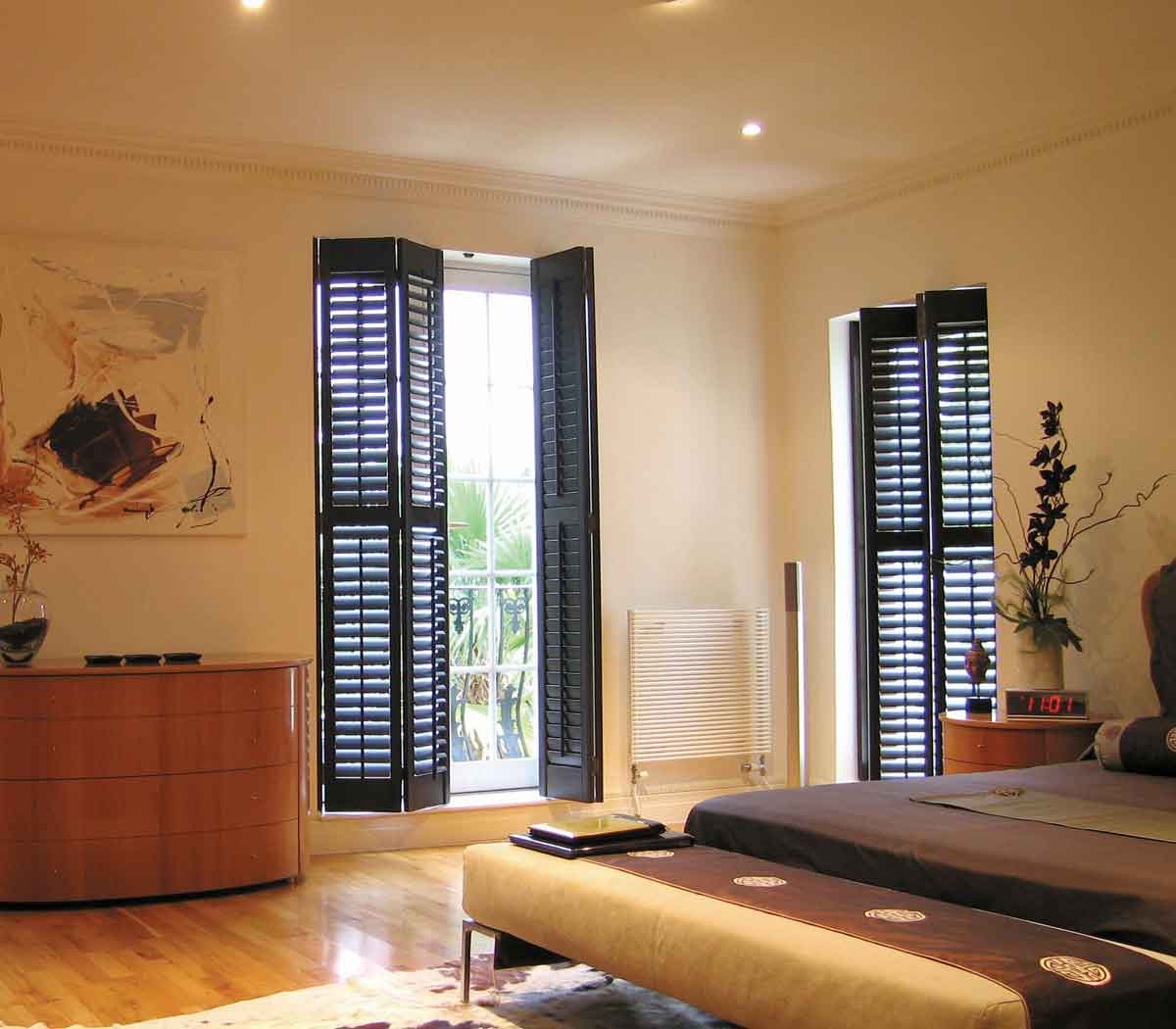
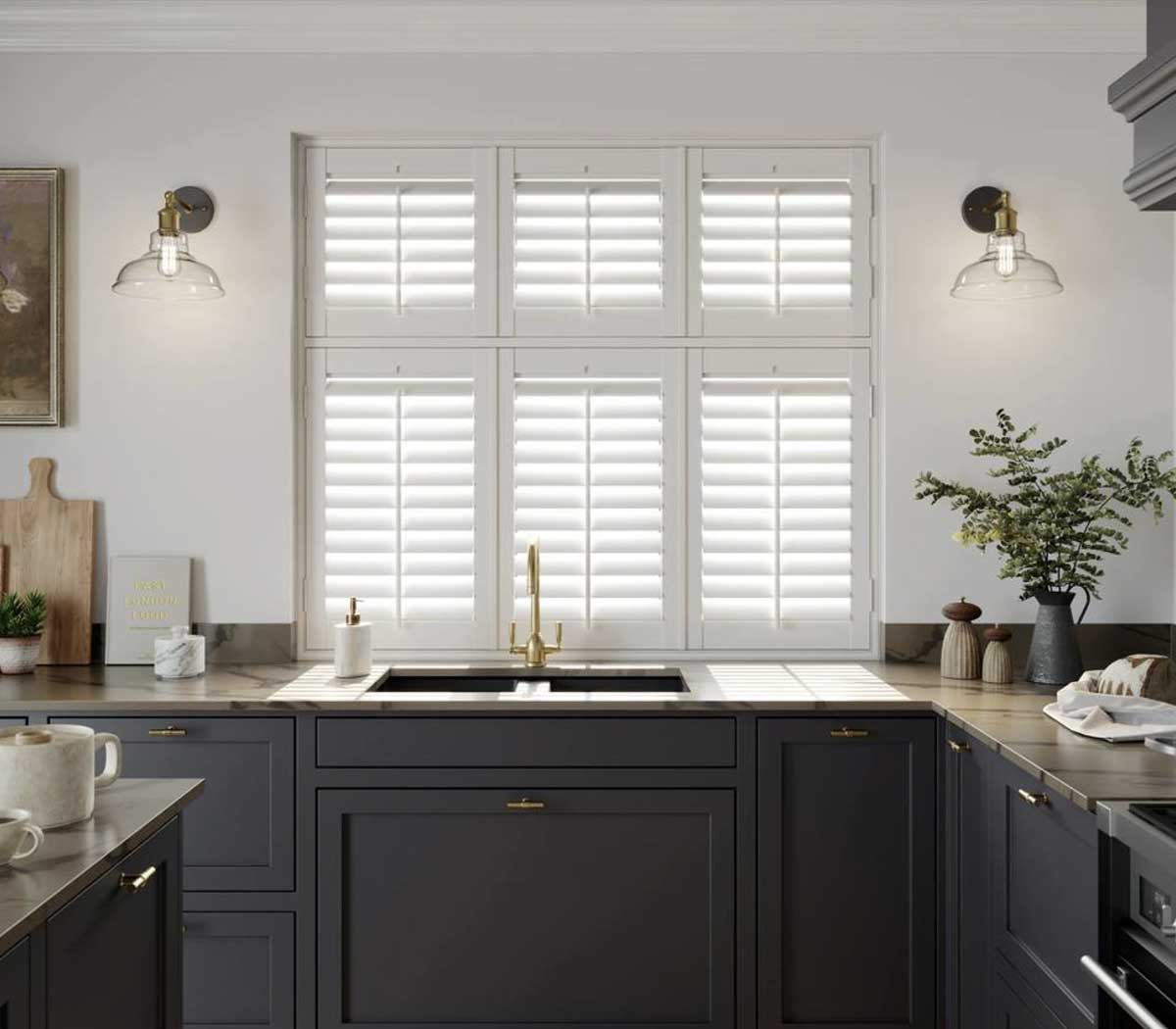
Plantation shutters tend to stand out because they change the way a room feels.
They bring structure to the window, balance to the space, and a sense of finish that other window furnishings rarely achieve.
That visual impact is usually what draws people to them first, long before details like light control or insulation come into the conversation.
This guide takes a closer look at how plantation shutters work, why they’re chosen for their appearance, and when they make the most sense in a home.
Why Plantation Shutters Change How a Room Feels
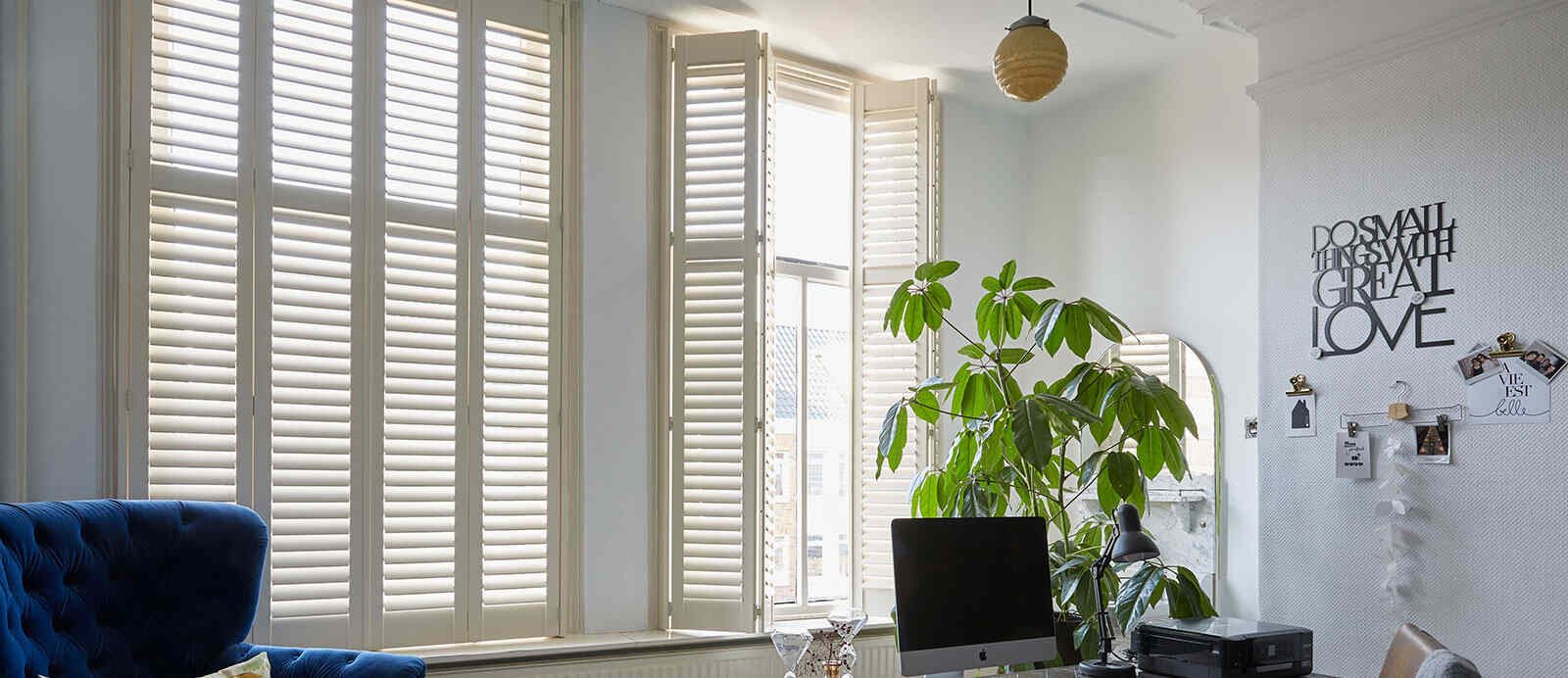
The appeal of plantation shutters is immediate.
They frame the window properly and bring balance to a space, whether the interior is modern, traditional, or somewhere in between. Their clean lines help a room feel settled rather than styled for now.
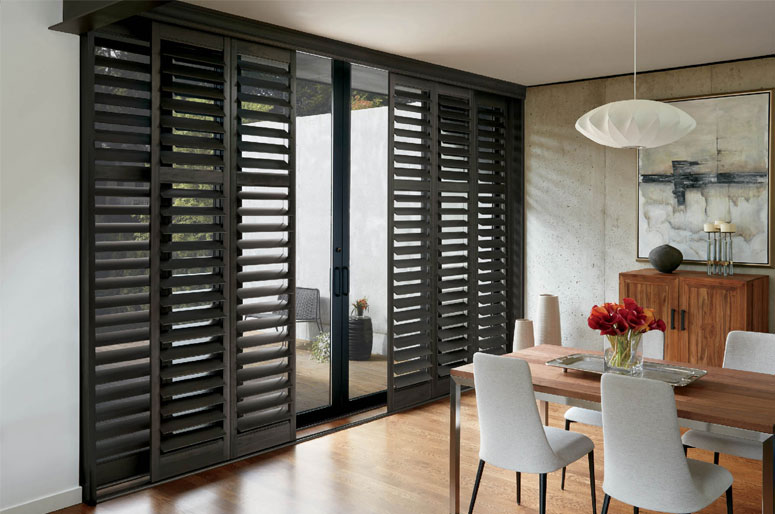
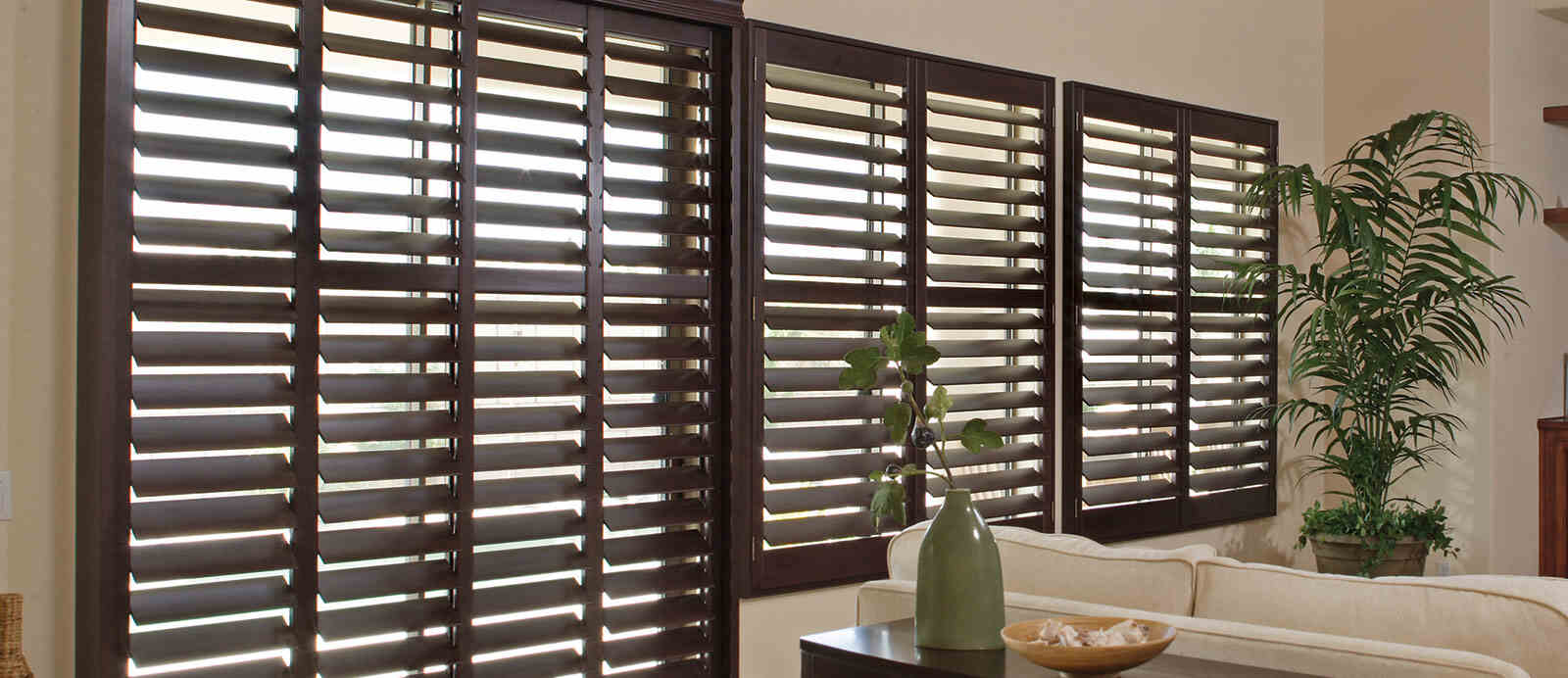
Unlike blinds or curtains that sit in front of the window, plantation shutters are fixed to the window opening itself. This gives them a built-in look that feels intentional, as though they were always part of the home.
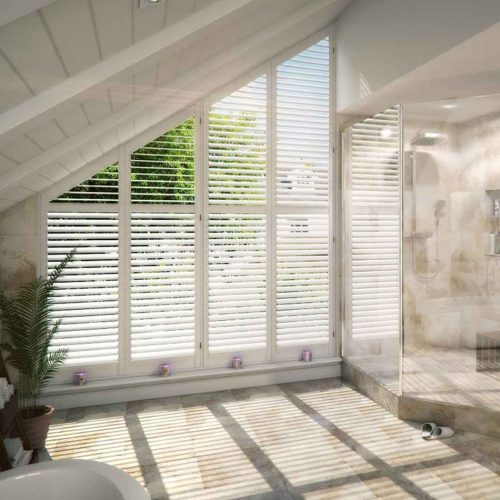
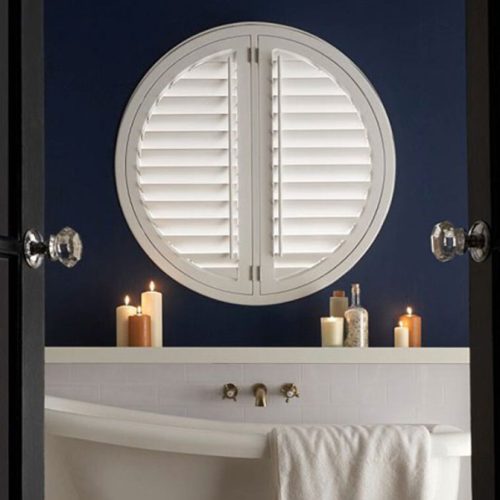
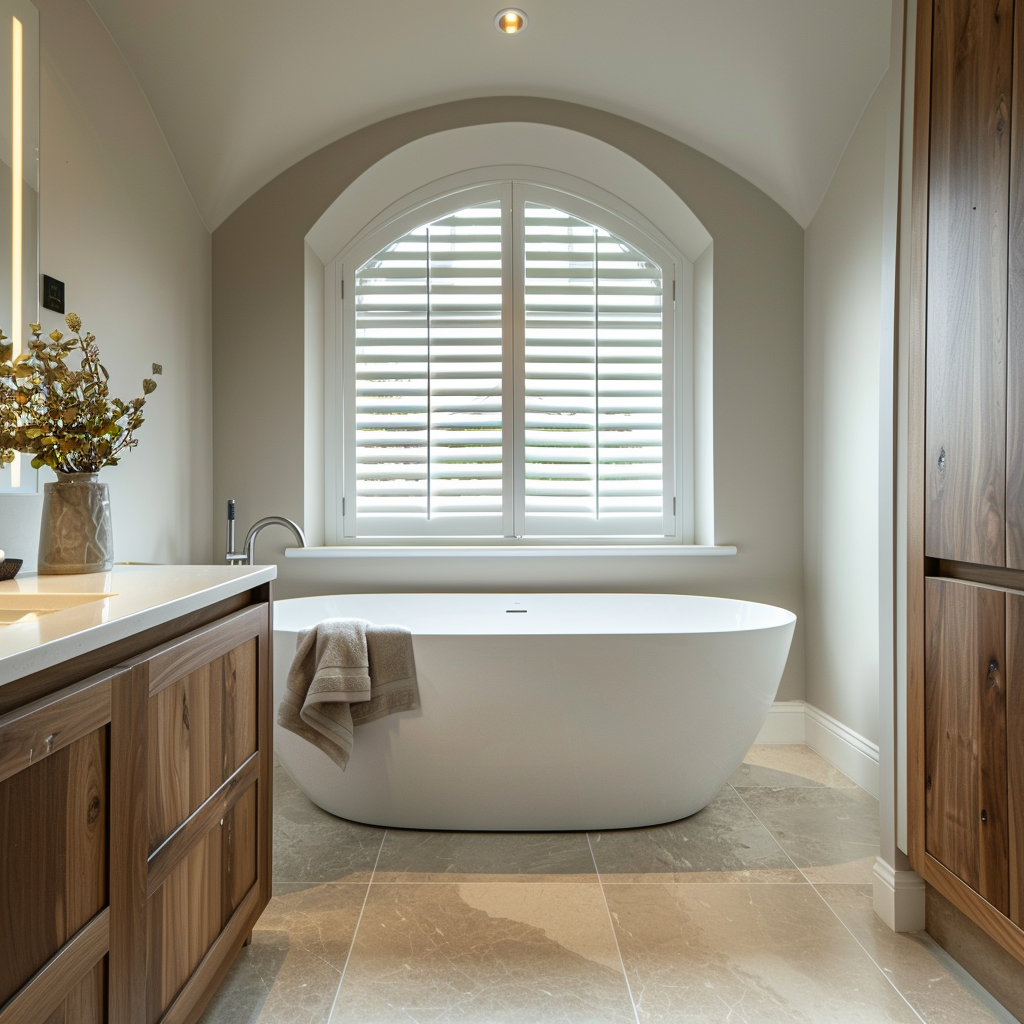
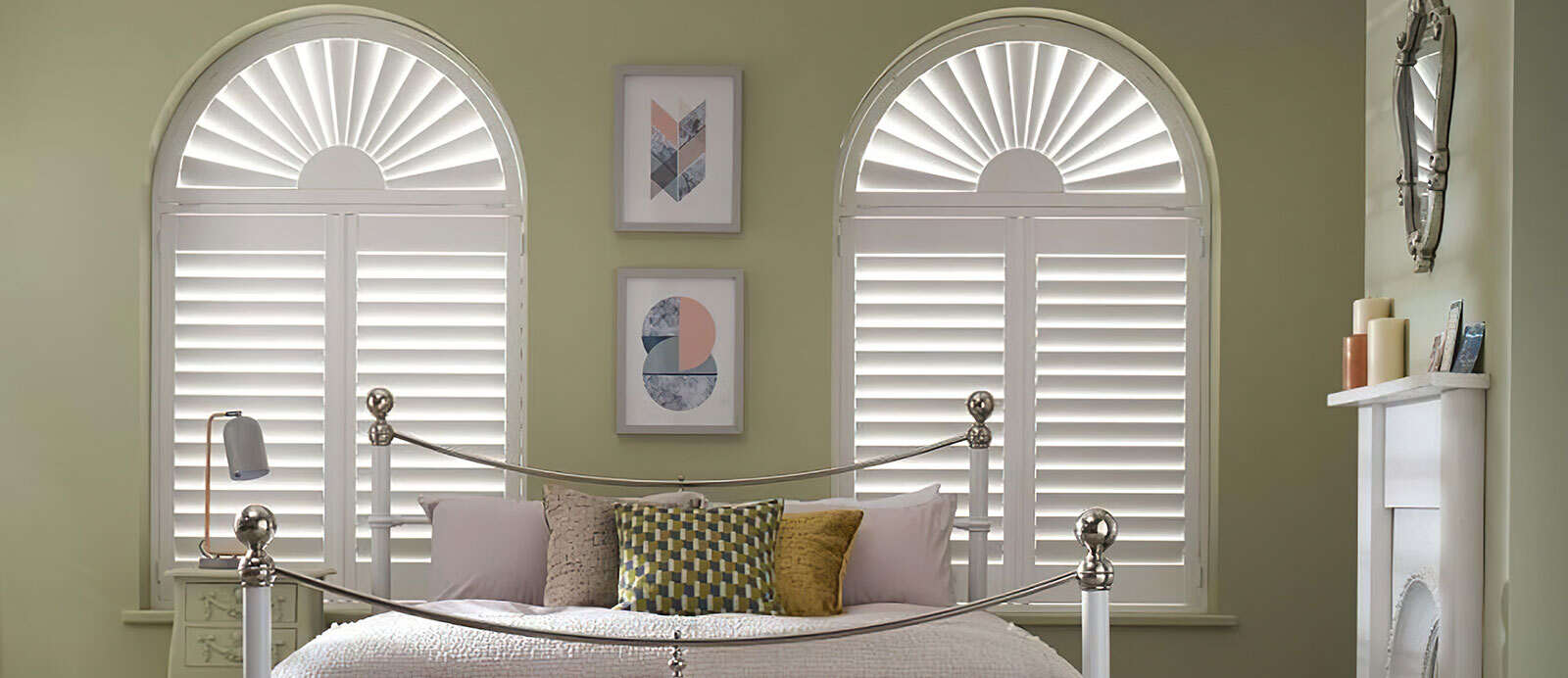
Because they’re custom made, plantation shutters can be designed to suit almost any window size or shape. Large openings, narrow windows, angles, and feature shapes are all handled cleanly without disrupting the flow of the room.
Made to Fit Windows Other Options Can’t
What gives plantation shutters that feel premium is that they don’t rely on standard sizing.
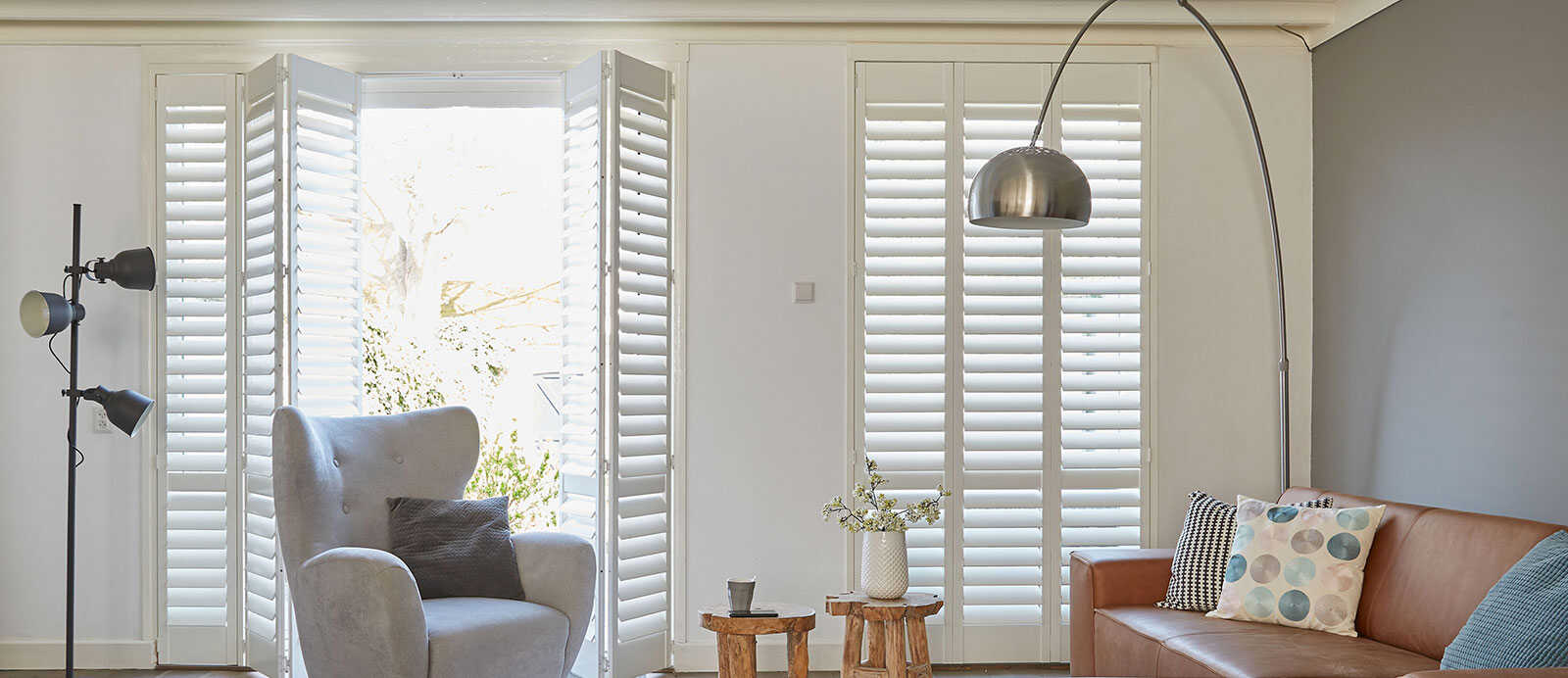
Each shutter is made to suit the exact dimensions of the window. This allows them to fit spaces that other window furnishings often struggle with, particularly wide openings, doors, and shaped windows where off-the-shelf options can look compromised.
The result is a window solution that feels tailored and visually calm, even in more challenging spaces.
How Plantation Shutters Work Day to Day
Once the look is right, practicality comes into play.
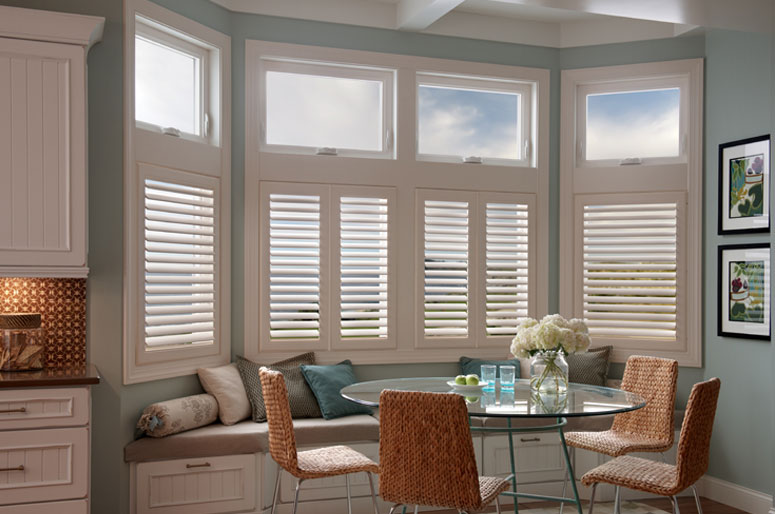
Plantation shutters use adjustable louvres to manage how light enters the room. Instead of lifting or lowering the entire covering, the angle of the louvres is adjusted to soften light, reduce glare, or close it off when needed.
Panels can also be opened fully, allowing the window to be clear while the shutters remain in place. Because they’re solid and fixed, they hold their position and keep their shape over time.
Light control and insulation are important, but they tend to be appreciated most once the shutters are already part of daily life.
Pairing Plantation Shutters With Blinds
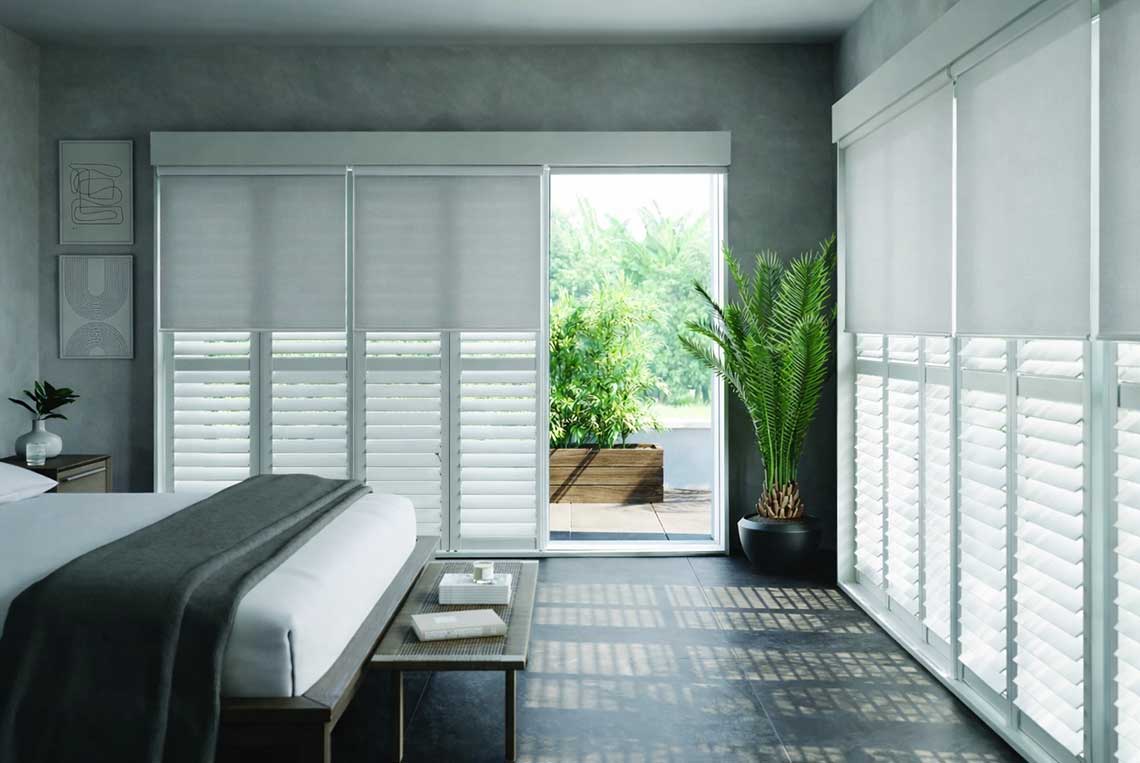
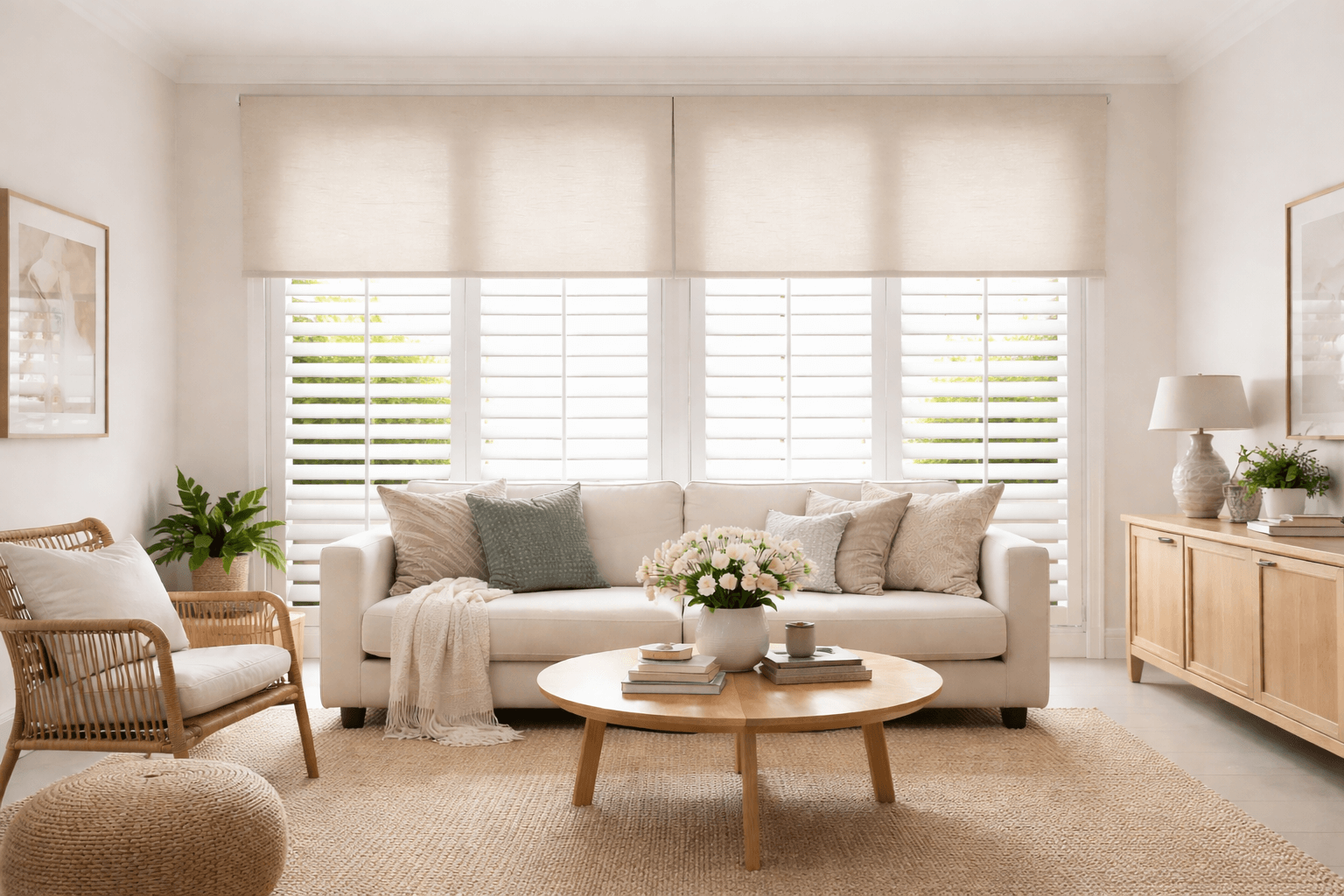
Plantation shutters are sometimes paired with roller blinds when extra flexibility is needed without changing the overall look of the window.
In this setup, the shutters remain the main visual feature. The blind sits neatly in front of them and are only used when required. This approach is common in bedrooms or street-facing rooms, where additional light control can be useful at certain times of day.
When the blind is raised, it stays out of sight and the window keeps its clean, structured appearance.
Pairing Plantation Shutters With Curtains
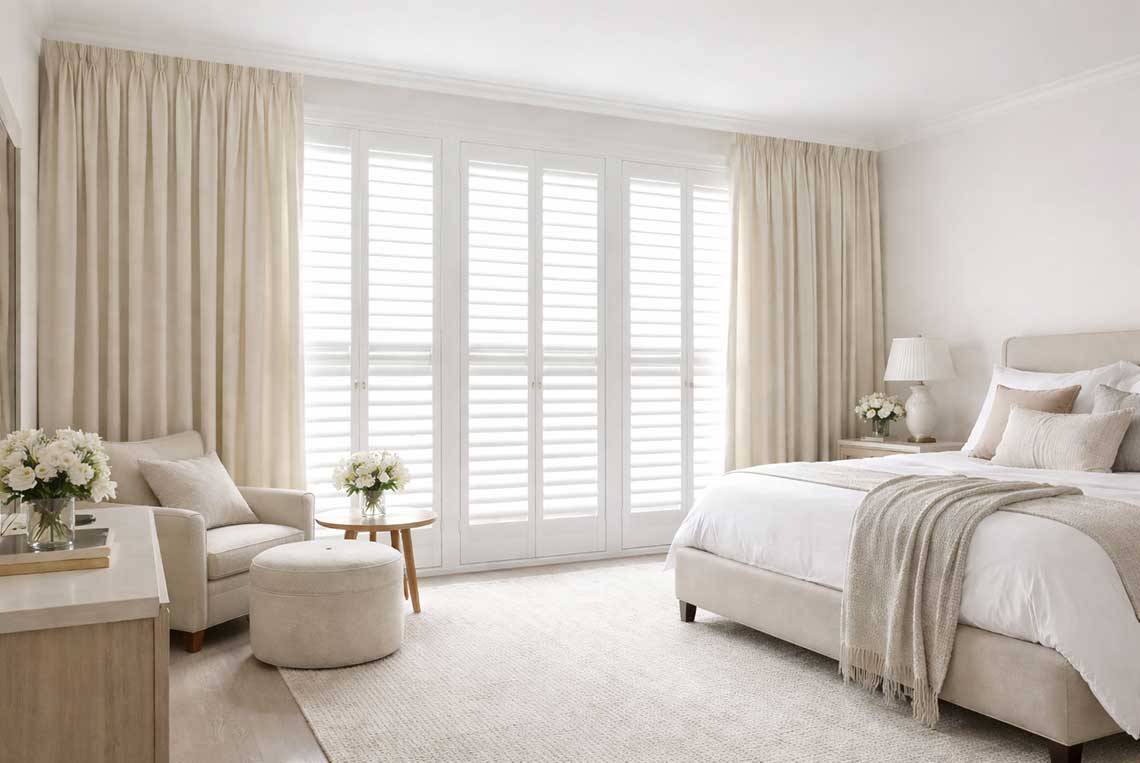
Plantation shutters can also be paired with curtains when a space calls for added softness or visual balance.
This combination is often used in larger rooms or homes with higher ceilings, where curtains help frame the window and add warmth and texture. The shutters provide structure and consistency, while the curtains shape the room around them.
When paired well, curtains sit around the window rather than in front of it, allowing the shutters to remain visible and do their job.
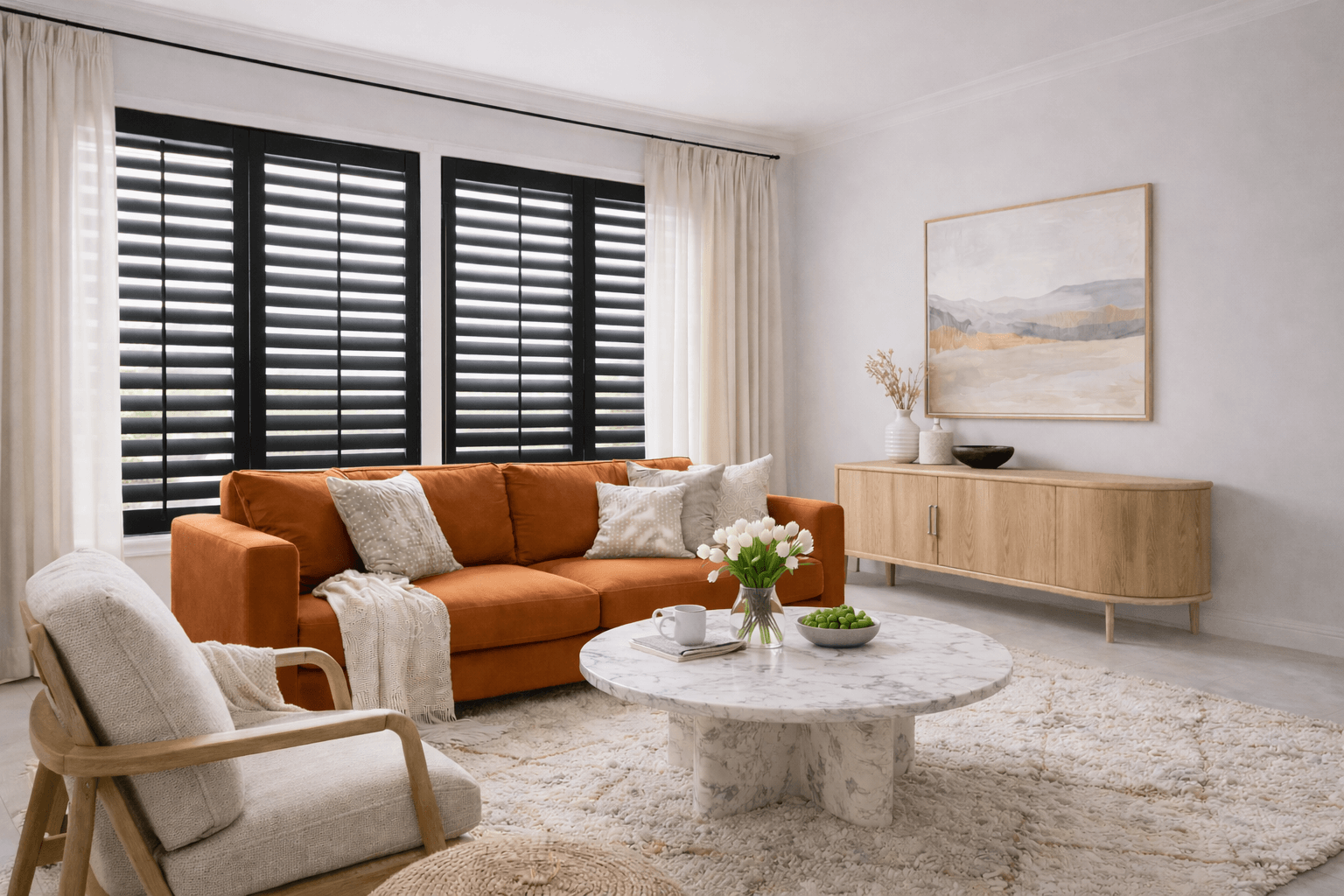
A Simple Way to Think About Shutter Materials
Plantation shutters are typically made from either PVC or timber, and both materials are widely used.
PVC is commonly chosen for areas where durability matters, while timber is often selected for spaces where warmth and texture are part of the design.
At this stage, it’s enough to know that material choice is guided by the room, the conditions, and the look you want to achieve. The finer details are best explored once you’re closer to making a decision and can see finishes in your own space.
When Plantation Shutters Make the Most Sense
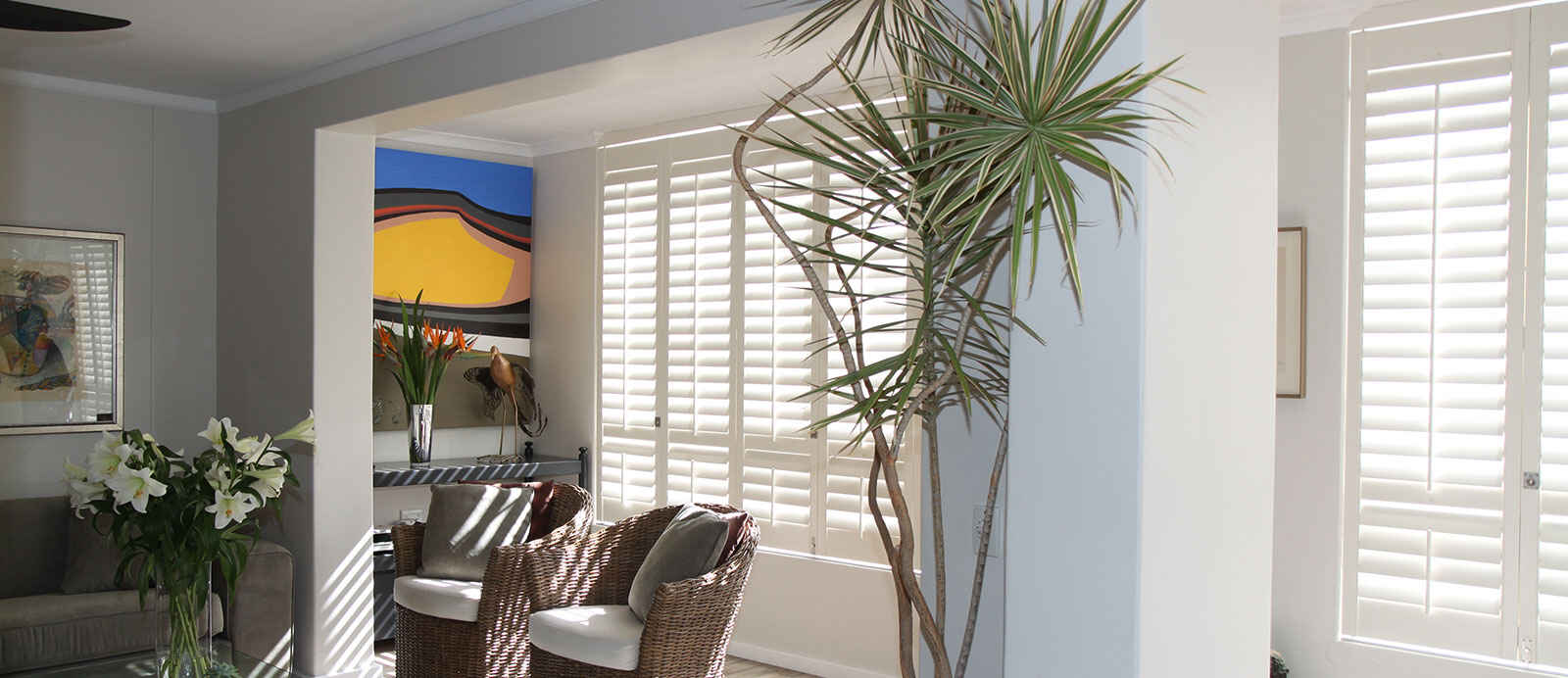
In many Australian homes, plantation shutters tend to make the most sense when the goal is to enhance the room rather than simply cover the window.
They work well in spaces where consistency matters, such as living areas, bedrooms, and open-plan homes where windows are visible from multiple angles. They’re also well suited to feature windows and architectural openings where fit and proportion play a bigger role.
Many homeowners choose shutters when they want one solution that works across different rooms without changing the look from space to space.
A Long-Term Investment
Plantation shutters are rarely chosen for short-term styling.
Their clean lines and fixed structure mean they don’t follow trends in the same way fabric window furnishings can. Once installed, they become part of the home rather than something that needs updating every few years.
That sense of permanence is a big part of why they’re often seen as a considered, long-term choice.
What Do Shutters Cost?
The cost of plantation shutters varies from home to home. It’s influenced by the size of your windows, the shutter style, and the material you choose.
As a general guide, pricing starts from around $400 for a standard window measuring 1,000mm wide by 1,000mm high.
From there, the final cost is shaped by a few practical factors, including:
the exact size and shape of your windows
whether PVC or timber is the better fit for the space
how the shutters are configured, such as hinged, sliding, or bi-fold
installation requirements unique to your home
Because plantation shutters are custom made, the most accurate way to understand pricing is with an in-home consultation. This allows everything to be assessed properly and ensures the final result suits both your windows and the space they sit in.
Moving From Research to the Right Window Solution
Understanding how plantation shutters work is helpful, but how they suit your home depends on the space, the windows, and the feel you want to create.
Details like material choice, slat size, and how shutters are paired with other window furnishings are best explored with clear guidance and real-world context.
If you’d like to learn more about custom plantation shutters and how they’re designed to suit different window types and home styles, you can explore the full range on our plantation shutters product page.